

uuWhen DrivinguPrecautions While Driving
Precautions While Driving
1Precautions While Driving
Driving Guidelines for Your Utility Vehicle
■
CAUTION: Do not drive on the road where water is
deep. Driving through deep water will cause damage
to the engine and electrical equipment and the
vehicle will break down.
Utility vehicles have a significantly higher rollover rate than other types of vehicles.
To prevent rollovers or loss of control:
• Take corners at slower speeds than you would with a passenger vehicle.
• Avoid sharp turns and abrupt manoeuvres whenever possible.
• Do not modify your vehicle in any way that you would raise the centre of gravity.
• Do not carry heavy luggage on the roof.
NOTICE
Do not operate the shift lever while pressing the
accelerator pedal. You could damage the
transmission.
In a Fog
■
NOTICE
Visibility becomes low when it is foggy. When you drive, turn on the low beam
headlights even during the daytime. Slow down, using the road line in the centre,
guard rails, and the taillights of the vehicle ahead of you as your driving guide.
If you repeatedly turn the steering wheel at an
extremely low speed, or hold the steering wheel in
the full left or right position for a while, the electric
power steering (EPS) system heats up. The system
goes into a protective mode, and limits its
performance. The steering wheel becomes harder
and harder to operate. Once the system cools down,
the EPS system is restored.
In a Strong Wind
■
If a strong side wind drifts your vehicle while driving, hold the steering wheel tight.
Slowly decelerate your vehicle and keep your vehicle in the middle of the road. Be
careful with wind gusts especially when your vehicle is exiting a tunnel, driving on a
bridge or river bank, and driving through an open area like a quarry, and when a
large lorry is passing by.
Repeated operation under these conditions can
eventually damage the system.
If the ignition switch is turned to ACCESSORY (q*1
while driving, the engine will shut down and all
steering and brake power assist functions will stop,
making it difficult to control the vehicle.
Do not put the shift lever in (N, as you will lose
engine braking (and acceleration) performance.
*
1: Models with the keyless access system have an ENGINE
START/STOP button instead of an ignition switch.
520

uuWhen DrivinguPrecautions While Driving
1Precautions While Driving
In Rain
■
During the first 1,000 km (625 miles) of operation,
avoid sudden acceleration or full throttle operation so
as not to damage the engine or powertrain.
The road is slippery when raining. Avoid hard braking, rapid acceleration, and
abrupt steering and be more cautious when driving. It is likely to experience
hydroplaning phenomenon if you are driving on a rutted road with puddles. Do not
driving in deep water and on flooded roads. This can damage the engine or
driveline, or cause electrical component failure.
Avoid hard braking for the first 300 km (200 miles).
You should also follow this when the brake pads are
replaced.
Other Precautions
■
1Driving Guidelines for Your Utility Vehicle
If there is a strong impact with something under the vehicle, stop in a safe location.
Check the underside of the vehicle for damage or any fluid leaks.
in a crash or a rollover.
2 Important Handling Information P. 40
2 Precautions While Driving P. 520
1In Rain
Be careful when hydroplaning phenomenon occurs.
When you drive on a road covered with water at
excessive speed, a layer of water builds between the
tyres and the road surface. If this occurs, the vehicle
cannot respond to control inputs such as steering,
and braking.
Slowly decelerate when you shift down. If the road is
slippery, sudden engine braking can cause the tyres
to skid.
521

 2024 Honda CR-V Owner's Manual
 2023 Honda CR-V Owner's Manual
 2021 Honda CR-V Owner's Manual
 2018 Honda CR-V Owner's Manual
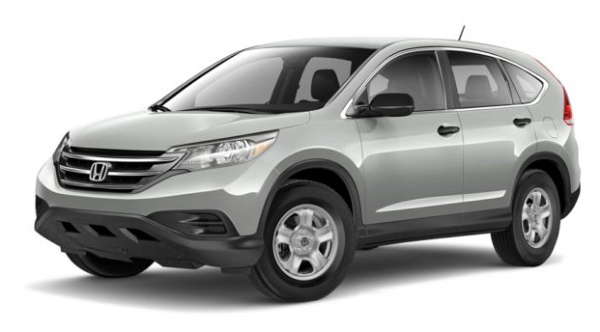 2015 Honda CR-V Owner's Manual


