

uuWhen DrivinguLane Departure Warning (LDW)*
Lane Departure Warning (LDW)*
1Lane Departure Warning (LDW)*
Alerts you when the system determines a possibility of your vehicle unintentionally
crossing over detected lane markings.
Important Safety Reminder
Like all assistance systems, LDW has limitations.
Over-reliance on LDW may result in a collision. It is
always your responsibility to keep the vehicle within
your driving lane.
How the System Works
■
If your vehicle is getting too close to detected
left or right side lane markings without a turn
signal activated, LDW will give audible and
visual alerts.
LDW only alerts you when lane drift is detected
without a turn signal in use. LDW may not detect all
lane markings or lane departures; accuracy will vary
based on weather, speed and lane marker condition.
It is always your responsibility to safely operate the
vehicle and avoid collisions.
The beeper sounds and the Lane Departure
message appears on the multi-information
display, letting you know that you need to
take appropriate action.
You can read about handling information for the
camera equipped with this system.
2 Front Sensor Camera* P. 374
1How the System Activates
How the System Activates
■
LDW may automatically shut off and the LDW
indicator comes and stays on.
2 Indicators P. 85
The system begins to search for lane markings when all the following conditions are
met:
• The vehicle is traveling between 45 and 90 mph (72 and 145 km/h).
• The vehicle is on a straight or slightly curved road.
• The turn signals are off.
• The brake pedal is not depressed.
• The wipers are not in continuous operation.
* Not available on all models
386


uuWhen DrivinguLane Departure Warning (LDW)*
LDW On and Off
■
Press the LDW button to turn the system on
and off.
Indicator
u The indicator in the button comes on
when the system is on.
LDW Button
Continued
387

uuWhen DrivinguLane Departure Warning (LDW)*
LDW Limitations
■
LDW may not activate or may not recognize lanes, and may activate even when
keeping in the middle of a lane, under certain conditions. Some examples of these
conditions are listed below.
■
Environmental conditions
• Driving in bad weather (rain, fog, snow, etc.).
• Sudden changes between light and dark, such as an entrance or exit of a tunnel.
• There is little contrast between lane lines and the roadway surface.
• Driving into low sunlight (e.g., at dawn or dusk).
• Strong light is reflected onto the roadway.
• Driving in the shadows of trees, buildings, etc.
• Shadows of adjacent objects are parallel to lane markings.
• Roadway objects or structures are misinterpreted as lane markings.
• Reflections on the interior of the front windshield.
■
Roadway conditions
• Driving on a snowy or wet roadway (obscured lane marking, vehicle tracks,
reflected lights, road spray, high contrast).
• Driving on a road with temporary lane markings.
• Faint, multiple, or varied lane markings are visible on the roadway due to road
repairs or old lane markings.
• The roadway has merging, split, or crossing lines (e.g., such as at an intersection
or crosswalk).
• The lane markings are extremely narrow, wide, or changing.
• The vehicle in front of you is driving near the lane lines.
• The road is hilly or the vehicle is approaching the crest of a hill.
• Driving over bumps.
388

uuWhen DrivinguLane Departure Warning (LDW)*
■
Vehicle conditions
• Headlight lenses are dirty or the headlights are not properly adjusted.
• The outside of the windshield is blocked by dirt, mud, leaves, wet snow, etc.
• The inside of the windshield is fogged.
• The camera temperature gets too hot.
• An abnormal tire or wheel condition (wrong sized, varied size or construction,
improperly inflated, compact spare tire, etc.).
• The vehicle is tilted due to a heavy load or suspension modifications.
389
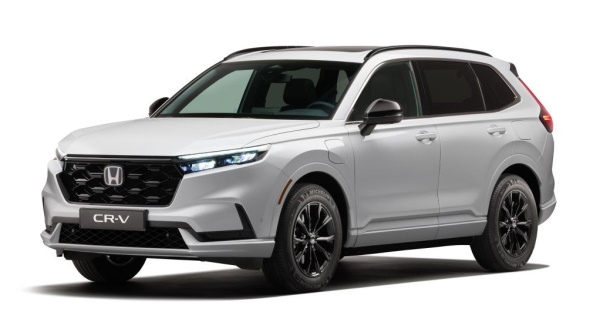 2024 Honda CR-V Owner's Manual
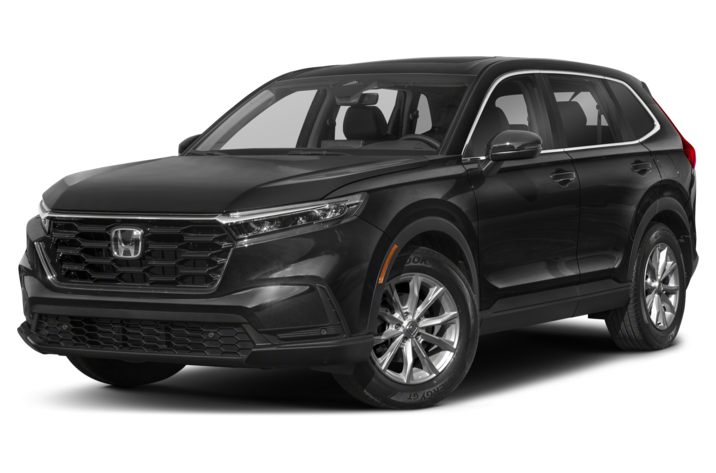 2023 Honda CR-V Owner's Manual
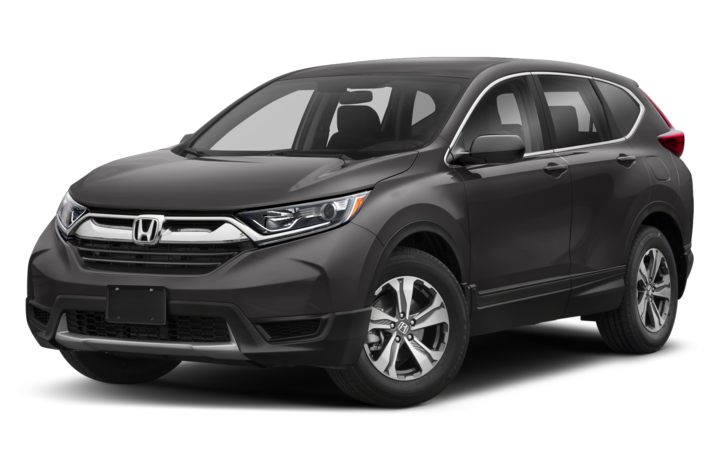 2021 Honda CR-V Owner's Manual
 2018 Honda CR-V Owner's Manual
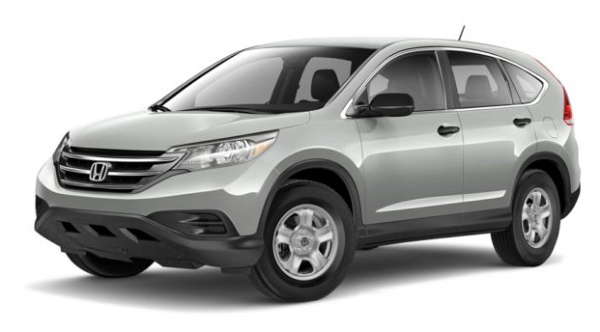 2015 Honda CR-V Owner's Manual


